
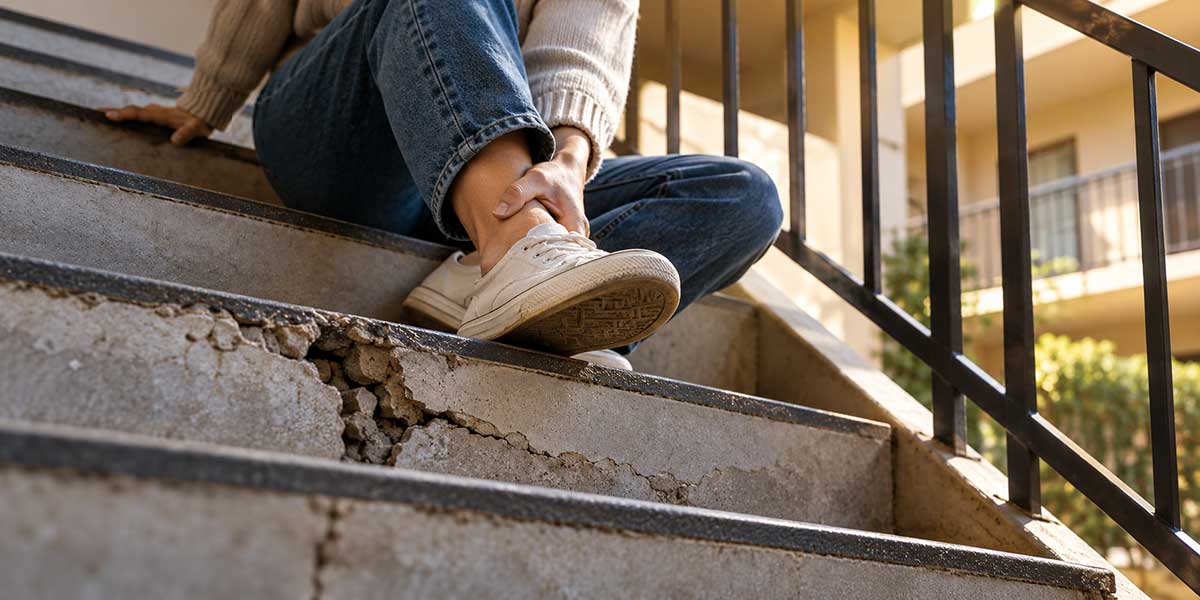
Who Is Responsible for Injuries Caused by Broken Stairs
Broken stairs in an apartment building can create a serious safety hazard. A loose handrail, cracked step, uneven surface, or damaged staircase can cause a fall that leaves someone with painful injuries and unexpected medical expenses. When a tenant or visitor gets hurt, an important question follows: Who is responsible for the accident?
In California, landlords and property managers may be liable for injuries caused by unsafe stairways if their negligence contributed to the accident. However, responsibility depends on who controlled the area, who knew or should have known about the hazard, and whether reasonable steps could have prevented the injury.
Understanding these factors can help injured tenants and visitors determine whether they may have grounds for a personal injury claim.
If you were injured because an apartment complex failed to maintain a safe property, learning about apartment complex negligence can help you understand your legal options. You can also learn more about stairway fall claims and the legal principles involved in California premises liability.
Can a Landlord Be Held Responsible for Broken Apartment Stairs?
Yes. A landlord may be held responsible when an unsafe staircase causes an injury and the landlord’s failure to exercise reasonable care contributed to the accident.
California property owners generally have a duty to keep areas under their control reasonably safe. This responsibility can include inspecting stairways, repairing damaged steps, maintaining handrails, ensuring adequate lighting, and addressing other hazards that could foreseeably cause someone to fall.
For example, imagine a tenant reports that a wooden step on a shared staircase is loose. The landlord receives the complaint but fails to arrange a repair. Several days later, another tenant steps on the damaged board, loses their balance, and suffers a serious ankle injury.
If the landlord had sufficient notice of the problem and a reasonable opportunity to address it, the failure to make repairs could support a negligence claim.
However, an accident alone does not establish liability. The injured person generally must show that the responsible party failed to exercise reasonable care and that this failure was a substantial factor in causing the injury.
What Types of Stairway Hazards Can Lead to an Injury Claim?
Apartment stairways can develop several dangerous conditions. Some problems are immediately visible, while others may go unnoticed until someone gets hurt.
Broken or Uneven Steps
Cracked concrete, loose wooden boards, broken stair edges, and uneven step heights can make it difficult to walk safely between floors. A person may catch a foot on a raised edge or lose their footing when a step shifts under their weight.
Property owners and managers should take reasonable steps to identify and address these conditions in areas they control. Depending on the circumstances, appropriate action may involve repairing the damaged step, restricting access to the staircase, or warning residents about the hazard until repairs are completed.
Loose or Missing Handrails
Handrails provide support when people climb or descend stairs. A loose railing can move unexpectedly when someone reaches for it, while a missing railing may leave people without adequate support.
A landlord may face liability if a handrail creates an unreasonable safety risk and the landlord negligently fails to repair it. Building codes and applicable safety requirements may also be relevant when determining whether a staircase was maintained properly.
Poor Lighting in Stairwells
Inadequate lighting can make it difficult to see damaged steps, changes in elevation, loose objects, or other hazards. This can be particularly dangerous in stairwells used by residents early in the morning or after dark.
If a landlord fails to maintain existing lights or address repeated complaints about a dark staircase, that failure may become relevant to an injury claim.
Slippery or Damaged Stair Surfaces
Water leaks, worn flooring, loose carpeting, and deteriorating stair treads can increase the risk of a fall. Outdoor apartment stairs may also become slippery because of rain, algae, or other environmental conditions.
The appropriate response depends on the nature of the hazard. A property manager might need to repair the surface, address a recurring leak, improve drainage, or provide a reasonable warning while the problem is being corrected.
Who Can Be Liable for an Apartment Stairway Accident?
The landlord is not necessarily the only party responsible for maintaining a safe staircase. Several people or businesses may have responsibilities depending on the property’s ownership, management, maintenance arrangements, and the location of the accident.
The Property Owner or Landlord
A property owner may be responsible for dangerous conditions in areas the owner controls or has a duty to maintain. Shared staircases, hallways, entrances, and other common areas are particularly important because landlords often retain responsibility for their upkeep.
A landlord’s liability may depend on whether the owner knew about the hazard, whether reasonable inspections should have revealed it, and whether the owner had the ability to correct the problem.
Landlords may also face questions about defects that existed before a tenant moved in, particularly when a dangerous condition should have been discovered or repaired before the property was rented.
The Apartment Property Manager
Property managers often handle maintenance requests, arrange repairs, conduct inspections, and communicate with contractors. Their responsibilities depend on the management agreement and the duties they actually undertake.
If a property manager receives repeated complaints about a broken staircase but fails to take reasonable action, the manager or the management company could potentially share responsibility for a resulting injury.
The property owner may also remain liable. Determining responsibility requires examining the parties’ respective duties and control over the dangerous condition.
Maintenance Companies and Contractors
Some apartment complexes hire outside companies to inspect or repair stairways. A contractor may be responsible if negligent repair work leaves a staircase unsafe or creates a new hazard.
For example, a maintenance company might improperly secure a handrail or leave loose materials on a staircase after completing work. If that conduct causes an injury, the company may be a potential defendant.
The fact that a landlord hired a contractor does not automatically eliminate the landlord’s own responsibilities. The circumstances and applicable legal duties determine whether one or more parties may be liable.
Does It Matter Whether the Landlord Knew About the Broken Stairs?
Yes. Evidence that a landlord or property manager knew about a dangerous staircase can be important when establishing negligence.
Two common ways to show knowledge of a hazard exist.
Actual notice means the responsible party knew about the problem. A tenant’s written maintenance request, an email to the property manager, or a previous incident report may help establish that the landlord was aware of the condition.
Constructive notice means the responsible party should reasonably have discovered the problem. For example, a visibly damaged staircase may have existed long enough that reasonable inspections would have identified it.
A landlord cannot necessarily avoid responsibility simply by claiming not to have known about a hazard. The question may be whether reasonable care would have revealed the problem and whether there was enough time to address it.
At the same time, a landlord is not automatically liable for every defect. A sudden problem that develops shortly before an accident may present different circumstances from a deteriorating staircase that has been neglected for months.
What If the Broken Stairs Were in a Shared Area?
The location of the staircase can be an important factor in determining liability.
Apartment buildings commonly have shared stairways that connect floors, provide access to parking areas, or serve as emergency exits. Landlords and property managers often retain control over these areas and are responsible for arranging necessary maintenance.
If a tenant falls on a broken staircase in a shared hallway, the investigation may focus on who was responsible for inspecting and repairing that area.
The situation can be different when the stairs are located inside a rented unit. A landlord’s responsibility may depend on the lease, the nature of the defect, whether the landlord retained control over the area, and whether the landlord had a duty to repair the condition.
Other facts can also matter. If a tenant or visitor caused the damage, for instance, responsibility may depend on who created the hazard and whether the landlord had a reasonable opportunity to discover and correct it.
What Evidence Can Help Prove Liability for Broken Stairs?
Evidence can help establish what caused the fall, how long the dangerous condition existed, and whether the responsible party failed to take reasonable precautions.
Photographs and videos of the staircase may document broken steps, loose railings, inadequate lighting, or other defects. If it is safe to do so, photographs taken soon after the accident can help preserve information about the scene before repairs are made.
Maintenance requests and communications with the landlord may also be valuable. Emails, text messages, work orders, and written complaints can show whether the property owner or manager had notice of the problem.
Building inspection records and maintenance logs may provide additional information about previous inspections, reported defects, and attempted repairs. Statements from other tenants or witnesses can help establish how long the hazard existed and whether anyone had previously raised concerns.
Medical records are important as well. They can document the injuries sustained, the treatment required, and the connection between the accident and the person’s physical condition.
An injured person may not have access to every relevant record. A property owner or management company may control maintenance documents and other information needed to investigate the incident. An attorney can help determine what evidence may be available and how to seek it through appropriate legal procedures.
What Should You Do After Falling on Broken Apartment Stairs?
Getting medical attention should be the first priority after a serious fall. Some injuries, including fractures and head injuries, may require prompt evaluation even when the full extent of the damage is not immediately apparent.
Once immediate medical needs have been addressed, documenting the accident can help preserve important information. Write down when and where the fall happened, what caused it, and whether anyone witnessed the incident.
Report the dangerous condition to the landlord or property manager in writing. Keep a copy of the communication and any response. If photographs of the staircase are available, preserve them along with any relevant messages or maintenance requests.
It is also sensible to keep records of medical appointments, treatment expenses, missed work, and other losses related to the injury. Avoid assuming that the property owner will preserve every record automatically.
If the staircase remains dangerous, avoid using it when possible and notify the responsible party. Do not attempt repairs yourself if doing so could create another safety risk.
Finally, consider speaking with a personal injury attorney if the injuries are significant or responsibility for the accident is disputed. An attorney can review the circumstances and explain whether a potential claim exists.
What Compensation May Be Available After an Apartment Stairway Injury?
When negligence causes a stairway accident, an injured person may be entitled to compensation for several types of losses.
Economic damages can include medical expenses, rehabilitation costs, lost wages, and reduced future earning capacity when supported by the evidence. Depending on the injury, future treatment or assistance with daily activities may also create recoverable expenses.
Non-economic damages may compensate for physical pain, emotional distress, loss of enjoyment of life, and other effects that do not have a direct price tag.
The amount of compensation depends on the circumstances of the case, including the severity of the injuries, the financial losses involved, the available evidence, and the extent to which each party was responsible.
California follows a comparative negligence system. If an injured person shares responsibility for an accident, their recoverable damages may be reduced according to their share of fault. This does not necessarily prevent them from bringing a claim.
No particular result is guaranteed. An attorney can evaluate the available evidence and explain what compensation may be recoverable under the applicable law.
How Long Do You Have to File a Claim in California?
California generally allows two years from the date of an injury to file a personal injury lawsuit. However, exceptions may apply depending on the circumstances.
Different procedures and shorter deadlines can apply when a claim involves a government entity, such as an accident caused by a dangerous staircase in a public building. Claims involving minors or other special circumstances may also require a different analysis.
Because missing a legal deadline can prevent an injured person from pursuing compensation, it is important to determine which rules apply as soon as possible.
Speak With a California Premises Liability Attorney
A fall on broken apartment stairs can lead to lasting injuries, medical expenses, and time away from work. When a dangerous staircase results from negligent maintenance, the landlord, property manager, contractor, or another responsible party may be liable.
However, every case depends on its facts. Establishing responsibility often requires determining who controlled the staircase, whether the hazard should have been discovered, and whether the failure to address it caused the injury.
Cutter Law helps injured people evaluate potential premises liability claims and understand their legal options. If you or someone you love was injured because of unsafe apartment stairs, consider requesting a case review to discuss what happened and whether a claim may be appropriate.

Brooks Cutter is the founder of Cutter Law P.C., a personal injury and class action firm with offices in Sacramento, Oakland, and Santa Rosa, California. A Stanford Law School graduate and former law clerk to Chief Judge James R. Browning of the Ninth Circuit, Brooks has spent decades fighting for seriously injured clients against corporations and insurers. He is nationally recognized in complex class action and mass tort litigation, has secured verdicts and settlements worth hundreds of millions of dollars, and has been named a Northern California Super Lawyer every year since 2005. He is fluent in Spanish and a devoted father of three.