
What To Do After a Truck Accident? A Step-by-Step Guide
- Safety steps shape the first minutes after a truck collision.
- Medical care builds the foundation for recovery and documentation.
- Strong evidence helps clarify fault and strengthens a claim.
- Legal guidance brings structure and support through a complex process.
Commercial trucks move through California highways, city streets, and industrial routes every hour of the day. Their size and weight create a different level of impact in a crash. These situations call for quick action, steady thinking, and a clear plan. This guide lays out each step in a straightforward way for anyone dealing with the aftermath of a truck accident.
Cutter Law supports people across the state through these moments by offering guidance on the claims process, investigation, and representation when the stakes feel high. The following path keeps things practical from the first moment through the claims process.
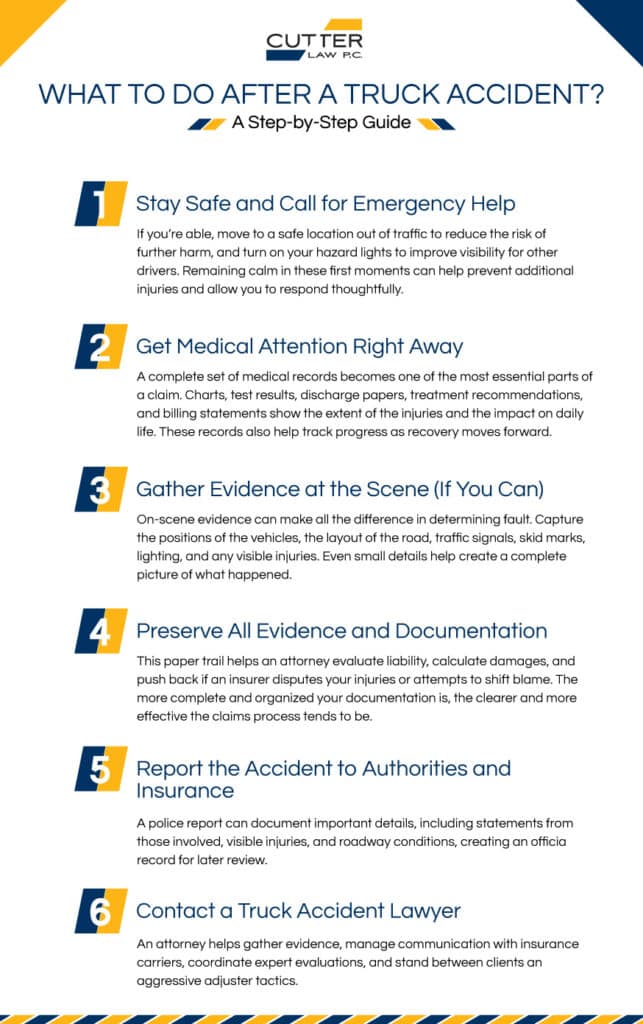
- Stay Safe and Call for Emergency Help
- Get Medical Attention Right Away
- Gather Evidence at the Scene (If You Can)
- Preserve All Evidence and Documentation
- Report the Accident to Authorities and Insurance
- Contact a Truck Accident Lawyer
- Experienced California Truck Accident Lawyers Fighting for Injured Victims
Stay Safe and Call for Emergency Help
Truck accident scenes can change in seconds. If you’re able, move to a safe location out of traffic to reduce the risk of further harm, and turn on your hazard lights to improve visibility for other drivers. Remaining calm in these first moments can help prevent additional injuries and allow you to respond thoughtfully.
Under California Vehicle Code rules, drivers involved in an accident resulting in injury or death must stop at the scene and notify law enforcement. In addition, the code also requires drivers to report qualifying collisions to the DMV. Once emergency services are on the way, it’s important to cooperate with responders and follow their instructions.
As paramedics assess injuries, law enforcement officers may secure the scene, redirect traffic, and document roadway conditions and statements. When speaking with officers, keep your comments brief, accurate, and factual. Avoid speculating about the cause of the crash or making statements that could be interpreted as accepting responsibility. Clear, straightforward information helps create an accurate report, which can support medical care, insurance review, and any legal claims that follow.
Get Medical Attention Right Away
Adrenaline masks pain. A person may feel steady right after the crash, then deal with stiffness, headaches, dizziness, or swelling later in the day. A medical evaluation brings clarity. Doctors check for internal injuries, soft-tissue trauma, head injuries, and spinal issues that sometimes develop more slowly.
A complete set of medical records becomes one of the most essential parts of a claim. Charts, test results, discharge papers, treatment recommendations, and billing statements show the extent of the injuries and the impact on daily life. These records also help track progress as recovery moves forward.
Truck accidents often result in serious injuries, and delayed injuries are common in many truck accident cases. A doctor can spot early changes before they grow stronger, which helps protect long-term health and the strength of the legal case.
Cutter Law helps readers understand how medical documentation, long-term symptoms, and treatment plans factor into a claim.
Gather Evidence at the Scene (If You Can)
On-scene evidence can make all the difference in determining fault. Capture the positions of the vehicles, the layout of the road, traffic signals, skid marks, lighting, and any visible injuries. Even small details help create a complete picture of what happened.
Collect contact information from every driver involved. Commercial truck drivers often work for larger companies, so identifying the employer, unit number, or trailer markings can be helpful later. Witnesses sometimes step forward with information, and their perspective often adds clarity, so gathering their details strengthens the investigation.
In many cases, injuries prevent people from collecting anything at the scene. A family member, investigator, or attorney can help gather missing pieces. Commercial truck accidents often require deeper evidence anyway—data from the truck’s onboard system, company safety records, and driver logs. These details become part of the picture in any serious truck accident claim, where multiple parties and complex fault questions are the norm.
Preserve All Evidence and Documentation
California follows a pure comparative negligence system, which means fault can be shared. If you’re found partially responsible, your compensation may be reduced by your percentage of fault, based on the evidence collected and reviewed.
To protect your claim, keep and organize anything connected to the crash, including:
- Medical records and treatment notes
- Repair estimates and vehicle damage documentation
- Receipts for medications, travel to appointments, and mobility aids
- Towing and storage invoices
- Proof of missed work and lost income (pay stubs, employer letters, time-off records)
- Letters, emails, and notes from insurance companies
This paper trail helps an attorney evaluate liability, calculate damages, and push back if an insurer disputes your injuries or attempts to shift blame. The more complete and organized your documentation is, the clearer and more effective the claims process tends to be.
Report the Accident to Authorities and Insurance
A police report can document important details, including statements from those involved, visible injuries, and roadway conditions, creating an official record for later review. In California, certain crashes also trigger legal reporting requirements, and completing those steps early can help prevent complications during the claims process.
After the scene is secure, notify your insurance company as soon as it is reasonably possible. Truck accidents often involve multiple layers of insurance coverage. Depending on the circumstances, the commercial driver may be insured through an employer policy, a leased vehicle policy, cargo-related coverage, or additional policies required under state or federal regulations.
Use caution when communicating with insurance adjusters, particularly those representing other parties. Their role is to protect their insured’s interests, and statements you make may be used to limit or challenge a claim. Keep communications factual and avoid speculating about fault. If you are unsure how to respond, it is often best to wait until you have legal guidance.
Timing is also critical. Many California injury cases are subject to specific filing deadlines, and some situations, such as claims involving government entities, have shorter time limits. Understanding these deadlines helps protect your ability to pursue compensation.
Contact a Truck Accident Lawyer
A truck accident is far more complex than a typical auto collision, and federal safety rules, maintenance standards, commercial policies, cargo requirements, and driver-hour regulations all shape how liability is assessed.
A strong legal team identifies every party involved. This can include the truck driver, the employer, the shipping company, the equipment manufacturer, or even a maintenance contractor. Each party may carry separate insurance coverage and separate responsibilities.
An attorney helps gather evidence, manage communication with insurance carriers, coordinate expert evaluations, and stand between clients and aggressive adjuster tactics. Cutter Law offers additional insight into California auto accident issues, which address many of the concerns people face during this time.
Additionally, Cutter Law provides regional guidance for residents in specific areas, including Sacramento and Oakland, which reflect the conditions and traffic patterns unique to each region.
Experienced California Truck Accident Lawyers Fighting for Injured Victims
Commercial truck crashes often create wide-ranging effects: medical bills, lost wages, disrupted routines, and long recoveries. Many people seek guidance when an accident occurs without any fault on their part. Cutter Law supports truck accident victims across California with a personal approach built on careful investigation and full attention to each client’s needs.
Our firm draws on its experience in commercial vehicle litigation, federal trucking regulations, and the unique demands of these cases to develop strong strategies for clients. Each case receives a tailored plan that reflects the injuries, financial impact, and long-term outlook.
From evidence collection to insurance negotiations and trial representation, Cutter Law guides clients through each step of a truck accident with clarity and support.
Family-owned, California-based, and client-focused. Contact us today for a free consultation at (888) 285-3333 or through Cutter Law.

Common causes of car accidents in California include distracted driving, speeding, DUI, failure to yield, aggressive driving, and poor road conditions.
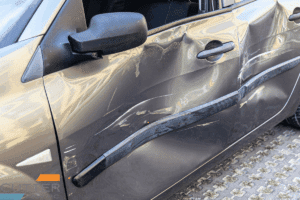
In California, leaving the scene of an accident can result in misdemeanor or felony hit and run charges, and victims or accused drivers should consult an attorney immediately.

California has a two-year statute of limitations that applies to the vast majority of personal injury lawsuits.