
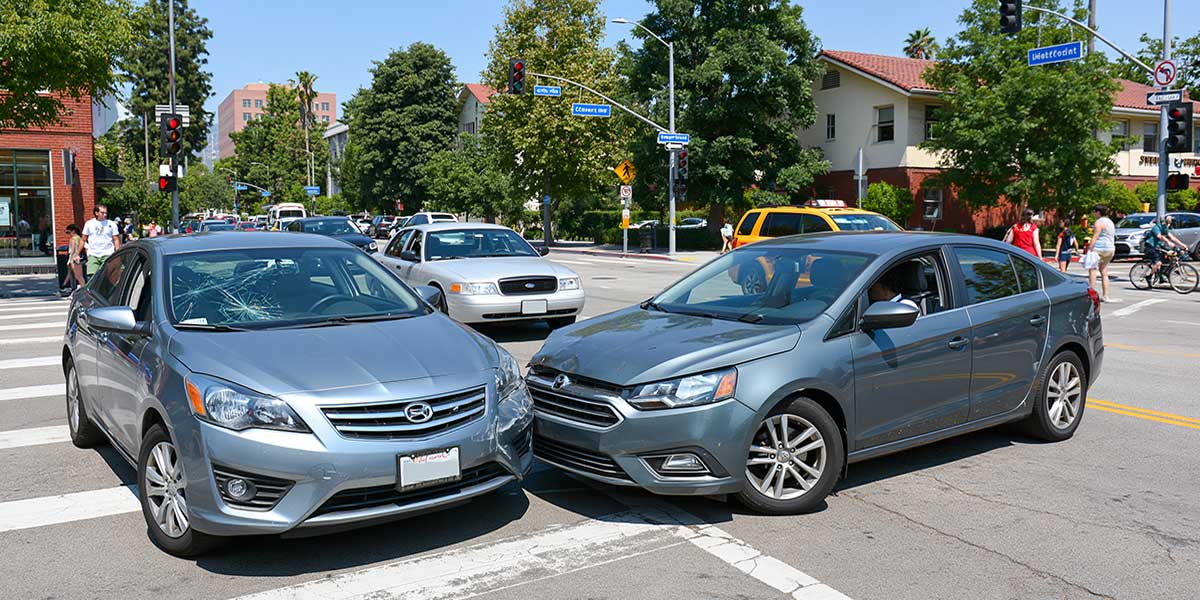
Car Accident Mistakes That Hurt Your Case in California
Most people know they should call the police and seek medical attention after a car accident. Less understood is that some of the most damaging mistakes occur not at the scene but in the days, weeks, and months that follow. Insurance companies are experienced at using those post-accident mistakes to reduce or deny claims, and they count on injured drivers not knowing any better. If you have been hurt in a crash, understanding what not to do after the fact is just as important as knowing what to do in the moment. Our California car accident lawyers have seen these mistakes derail otherwise strong cases. Here is what to avoid.
Waiting Too Long to See a Doctor
Delaying medical treatment is one of the most common and costly mistakes injured drivers make. After an adrenaline-fueled crash, pain and injuries are not always immediately apparent. Whiplash, soft tissue damage, and even traumatic brain injuries can take hours or days to produce noticeable symptoms. If you wait a week before seeing a doctor, the insurance company will argue that your injuries were not caused by the accident or that they were not serious enough to require urgent care.
Medical records with timestamps are some of the most important evidence in a car accident claim. A gap between the accident date and your first medical visit gives the defense an opening to question the connection between the crash and your injuries. See a doctor as soon as possible, even if you feel mostly fine, and follow through with every recommended appointment and treatment plan. Gaps in treatment are used the same way; if you stop attending physical therapy midway through, an insurer will argue your injuries have resolved.
Giving a Recorded Statement to the Other Driver’s Insurance Company
Shortly after an accident, an adjuster from the at-fault driver’s insurance company will often call you and ask for a recorded statement. They may frame it as routine and necessary to process the claim. It is not. You are not legally required to give a recorded statement to the other party’s insurer, and doing so almost always works against you.
Adjusters are trained to ask questions in ways that elicit answers that minimize your injuries or suggest shared fault. Saying something like “I’m doing okay” or “I didn’t see them coming” can be used to undermine your claim. Politely decline, and direct all communications to your attorney. California law does not require you to cooperate with the opposing insurer’s investigation.
Posting About the Accident on Social Media
Insurance companies routinely monitor the social media accounts of claimants. A photo of you at a weekend barbecue, a check-in at a hiking trail, or even a comment that you are “feeling better” can be used as evidence that your injuries are not as serious as claimed. This does not require them to misrepresent what you posted; even an innocent photo taken on a good day can be presented out of context to a jury or used in settlement negotiations to push your payout down.
The safest approach after an accident is to avoid posting anything about your physical condition, your activities, or the accident itself until your case is fully resolved. If you must stay active on social media, review your privacy settings and avoid any content that could be misread.
Accepting a Settlement Offer Too Quickly
Insurance companies often make early settlement offers shortly after an accident, sometimes within days. These offers are almost always lower than the full value of your claim, and for good reason from the insurer’s perspective: they are made before the full extent of your injuries is known, before you have completed treatment, and before you have had a chance to consult an attorney.
Once you accept a settlement and sign a release, you cannot go back and ask for more money even if your injuries turn out to be more serious than initially apparent. A herniated disc that seemed minor may require surgery six months later. A concussion may develop into persistent post-concussion syndrome. Accepting a fast settlement closes the door on recovering for those future costs.
Never sign a release or accept any payment without first speaking with a car accident attorney who can evaluate whether the offer reflects the true value of your medical expenses, lost wages, and pain and suffering.
Admitting Fault or Apologizing at the Scene
California follows a pure comparative negligence system, meaning that even a partial admission of fault can reduce the compensation you are entitled to recover. An apology at the scene, a statement to the police that you “didn’t see them,” or even an informal text message to the other driver expressing regret can be used to assign you a percentage of fault that reduces your payout proportionally.
This is not about being dishonest. It is about recognizing that fault in a car accident is a legal determination made after a full investigation, not something that should be decided in the immediate aftermath of a stressful collision. Let the police, insurers, and attorneys assess the facts. Do not say anything at the scene beyond exchanging contact and insurance information.
Failing to Document the Scene and Your Injuries
If you are physically able to do so, photograph everything before vehicles are moved: the damage to all cars involved, the positions of the vehicles, skid marks, road conditions, traffic signals, and any visible injuries. Get the names and contact information of any witnesses. These details fade quickly and may be impossible to reconstruct later.
Your injuries should also be documented continuously throughout your recovery. Photograph bruising, lacerations, and swelling as they develop and change. Keep a written log of your symptoms, pain levels, and how your injuries affect your daily life. This kind of contemporaneous documentation is far more persuasive to a jury than a retrospective account months later.
Handling the Claim Without an Attorney
Insurance companies have experienced adjusters and legal teams whose job is to resolve claims for as little as possible. Representing yourself against that system puts you at a significant disadvantage, particularly in cases involving serious injuries, disputed fault, or an uninsured driver.
An attorney does not just negotiate; they investigate the accident, identify all potentially liable parties, gather evidence you may not have access to on your own, and know the true value of your claim based on comparable cases. Most car accident attorneys, including those at Cutter Law, work on contingency, meaning you pay nothing unless compensation is recovered for you.
At Cutter Law P.C., our California car accident attorneys have recovered significant compensation for clients across Northern California who came to us after making some of these mistakes. It is rarely too late to get the legal help you need. Contact us at 888-285-3333 or through our contact page for a free consultation.

Brooks Cutter is the founder of Cutter Law P.C., a personal injury and class action firm with offices in Sacramento, Oakland, and Santa Rosa, California. A Stanford Law School graduate and former law clerk to Chief Judge James R. Browning of the Ninth Circuit, Brooks has spent decades fighting for seriously injured clients against corporations and insurers. He is nationally recognized in complex class action and mass tort litigation, has secured verdicts and settlements worth hundreds of millions of dollars, and has been named a Northern California Super Lawyer every year since 2005. He is fluent in Spanish and a devoted father of three.